Feudalism, way back in Medieval Europe was where individuals were viewed as ‘free peasants’. In the words of Ted, feudalism “describes relationships between lord and vassal (peasant) organised around property and allegiance.”
This basically meant, the peasants were free to do as they please with their land, however their lord told them how to use their land and what to do with it. So, were they really free? Well they sure thought they were. This sounds familiar doesn’t it.
Through the 21st Century, feudalism is now, as described by Ted, ‘Feudalism 2.0′ which is pretty much the same thing but an online version – just like everything is now. Heres how it works; users = peasants, lords = stacks, FAANG Walled Garden. This probably makes no sense to you.
Facebook, Amazon, Apple, Netflix and Google (FAANG) are all contributing to the internet and through this they have their own users. Their users think they are creating content, posting or watching for themselves when in reality, they are paying their walled gardens simply by using the program. Not only this, but the FAANG wall garden are controlling users content through monetisation, copyrighting, etc.
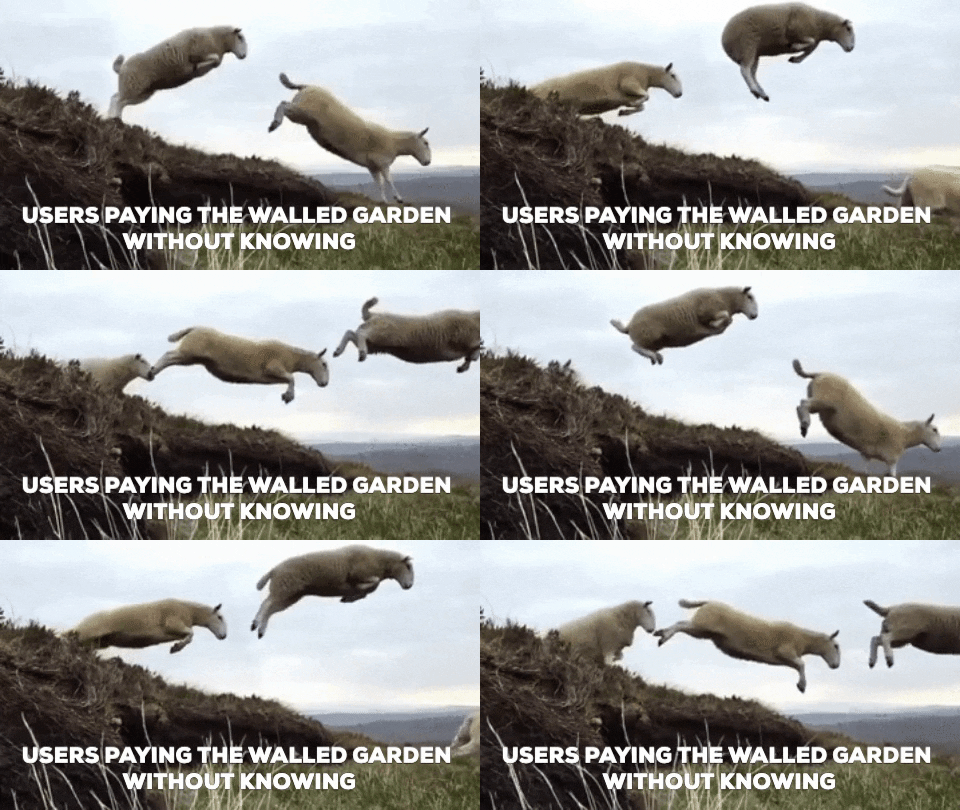
My remediation above, shows how us users are all just like sheep to a farmer. We think we are living freely and doing as we please online when in reality we are being told what and how to post content, and end up all looking the same. We are paying our walled gardens simply by using them. There is just no other way of saying it.
I am about 80% sure this post makes no sense to people outside of my degree.
Stay True, R.

 immerse into media
Rubs this totally made sense! You actually explained this so well in a way that I completely understood the comparison you made from medieval times to the 21st century. The introduction of technology has changed so much but it’s crazy to think this ‘feudalism’ concept is still extremely relevant, even though also very different. Also, loved the remediation! Was cute, funny, but also represented the message you intended it to. My only bit of advice (don’t worry, I need to work on it too), is hyperlinking. Possibly providing a site or 2 for readers to look more into this concept. Love it! x
LikeLiked by 1 person
Hey Great post! It is evident there is a comparison to the 21st century, there is always guidelines and really no complete freedom to digital media, everything’s connected. In my post I said users are peasants of today, I never really thought of it this way, ‘we are the product’ and is the big concept of marketing. This relates to so many ideas, the attention economy, and media influences, the views and comments on posts allows more interaction, like watching something to see what the fuss is even even if you don’t like it, their getting more money. Maybe there is no way around it, we can still create and communicate to an extent. Clever remediation and so much to explore.
LikeLiked by 2 people
Hey ruby!!! you completely made sense within this blog post and you explained what Feudalism is in a way in which I can understand!!! so well done girl!. I love how you made the comparison to the 21st century to the medieval times. The fact that you brought the concept of FAANG within your blog post is amazing! Love the remediation as well! and as someone else stated above, maybe for next time add a hyperlink so your viewers can possible look into where you found your information from! loved your blog post this week!!! x
LikeLiked by 1 person
Hey Ruby! Great post! I also linked back to the medieval times in my blog post. Instead I spoke about how there is still a similar hierarchy in todays society but in the digital media world. I used this interesting article to link to ideas about digital feudalism https://web-strategist.com/blog/2019/09/14/the-rise-of-digital-feudalism-chances-are-youre-a-serf/
LikeLiked by 1 person