Codenames
Codenames was the first game we were introduced too in class and I think it was the best way to be introduced to tabletop games this semester. Being aimed at the age demographic of 14+ years made the game one of the easiest to understand just strictly through the ‘Game Overview’. I would say this is where I had my ‘ahhh’ moment of my understanding of the game. At first it reminded me of the game Battleships, however after we started to play the game, this opinion changed quickly. It took us around 25-30 minutes to set up and read the rules for us to fully understand how the game mechanics worked. Once we started playing, an element of ease and free flow came across all of us players. As the mechanics of the game are based around guessing and just taking chances, this created our magic circle to feel as though we were fully in the game, we eventually just lost track of time.
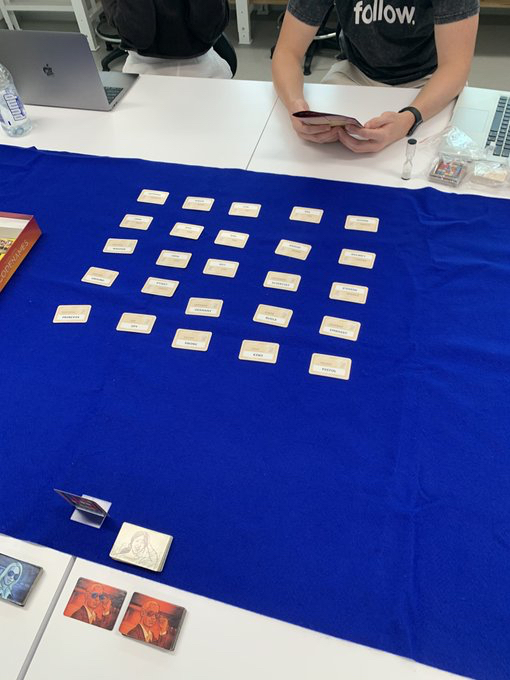
My affective responses to the design of the game were to be in the moment of the game and not think about anything else. Another thing I realised as a response to this game was wanting to know my players better, as I find it would be such an amusing game to play with good friends or family. My personality type is very ‘rip off the band aid’ as I like to say, and this game was the epitome of that. Even if I was unsure about whether my answer was right or wrong, it didn’t matter to me, I just wanted to say it and move forward. As the field operatives were guessing the cards, I noticed that if they were to get 2 or more correct in a row, the confidence level was getting higher and higher as you felt that you were ‘on a roll’.
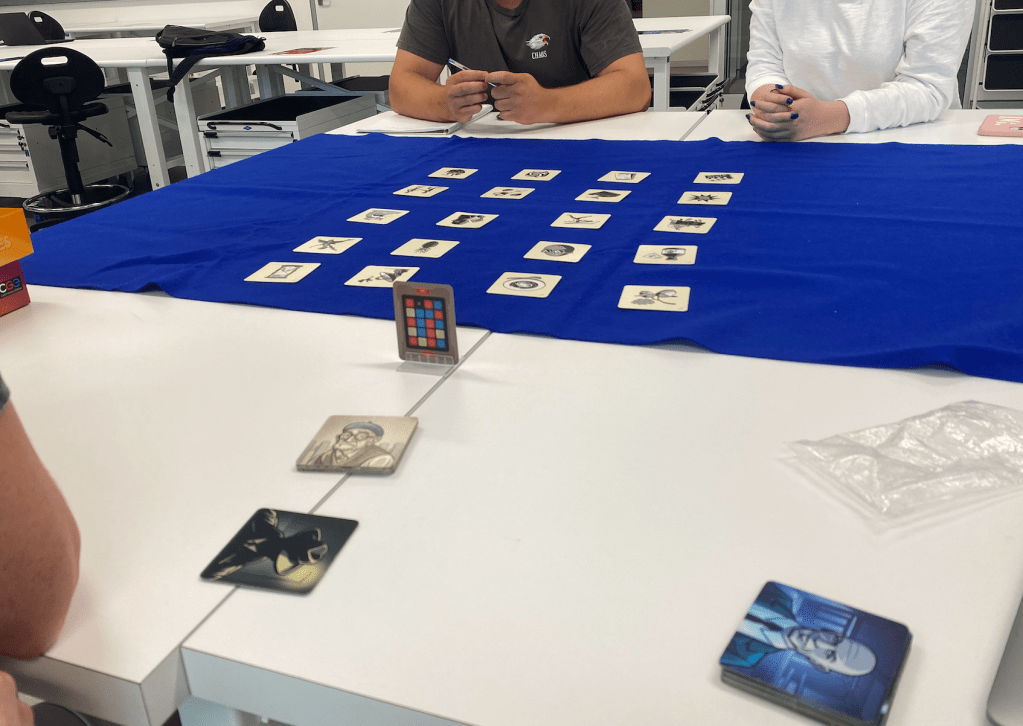
To me this game didn’t have a setting or story per say, as it didn’t include fictional characters there was really no need for the game to be set in a particular era or place. The guessing and risk element of the game made the tension between not only the two teams but amongst our team players grow. There was a sense of not wanting to let your Spymaster down by not understanding their clue correctly. The playfulness of the game made it feel effortless and this also reflected the components of the game. In saying this, however, it is a very cognitive game as there is a lot of mind work that goes into it. Once we reached the flow state, which I would say was after about 2 turns of the first game, the game formed its own magic circle and we all wanted to stay in it.
Splendour
Opening the box of this game couldn’t have been more of an opposite experience to Codenames. When we opened the box, we all felt so overwhelmed. There was so much to the mechanics of the game and the use of the word ‘token’ was throwing us off so much. The confusion for me kicked in as we were setting up the game, whereas with Codenames, I never felt confused. The learning process of this game was slow and took up a lot of time. It took me a while to figure out the aim of the game as I felt the games rules were written to people who already knew what the game was and not aimed at people who had never heard of the game before. So, we decided to just start playing the game and not worry too much about what the written side was saying.
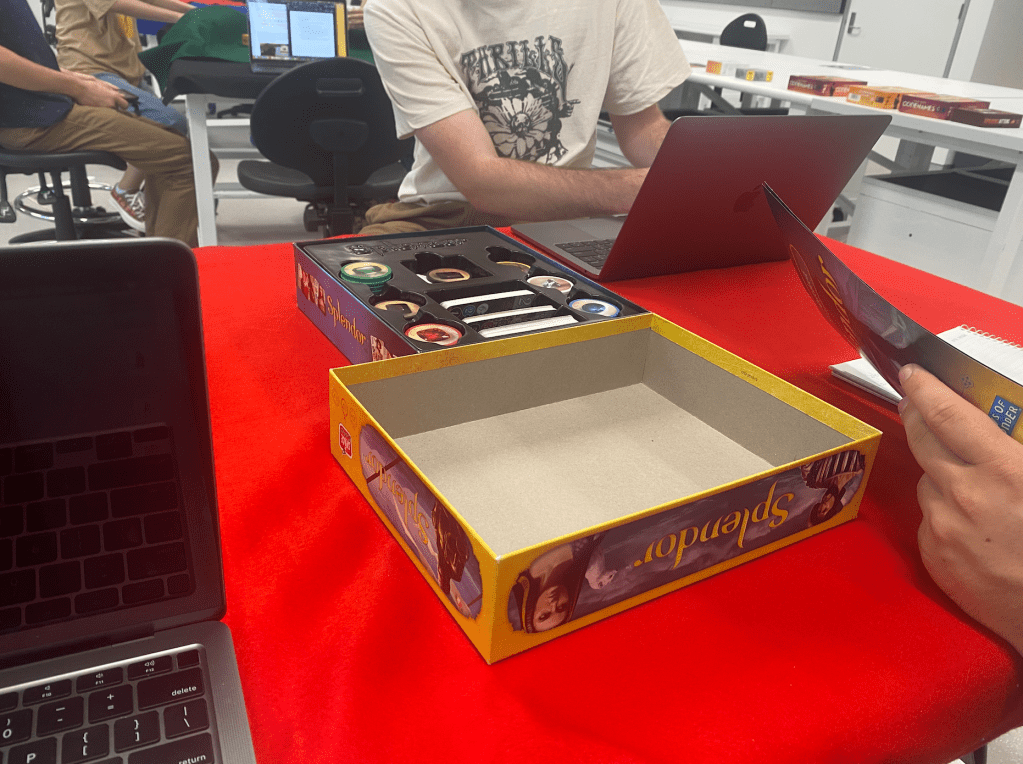
Before starting, though, I did feel ‘poor’ as the game overview and instructions kept talking about tokens, and I didn’t have any as of yet, so I felt like I was already behind. This game, very early on, became very strategic. As it was every player for themselves, I felt that I had to always watch out for what my opponents were doing and the actions they were taking. This quickly became way too overwhelming as keeping up with my own game took up enough brain space for me as it was. This games magic circle was a completely different vibe to Codenames. Codenames felt as though it connected us all together and formed a somewhat friendship, whereas Splendour was very much ‘you are my opponent and I want to beat you’. I didn’t feel the need to know the other players. However, the magic circle was one of competitiveness and strategy.
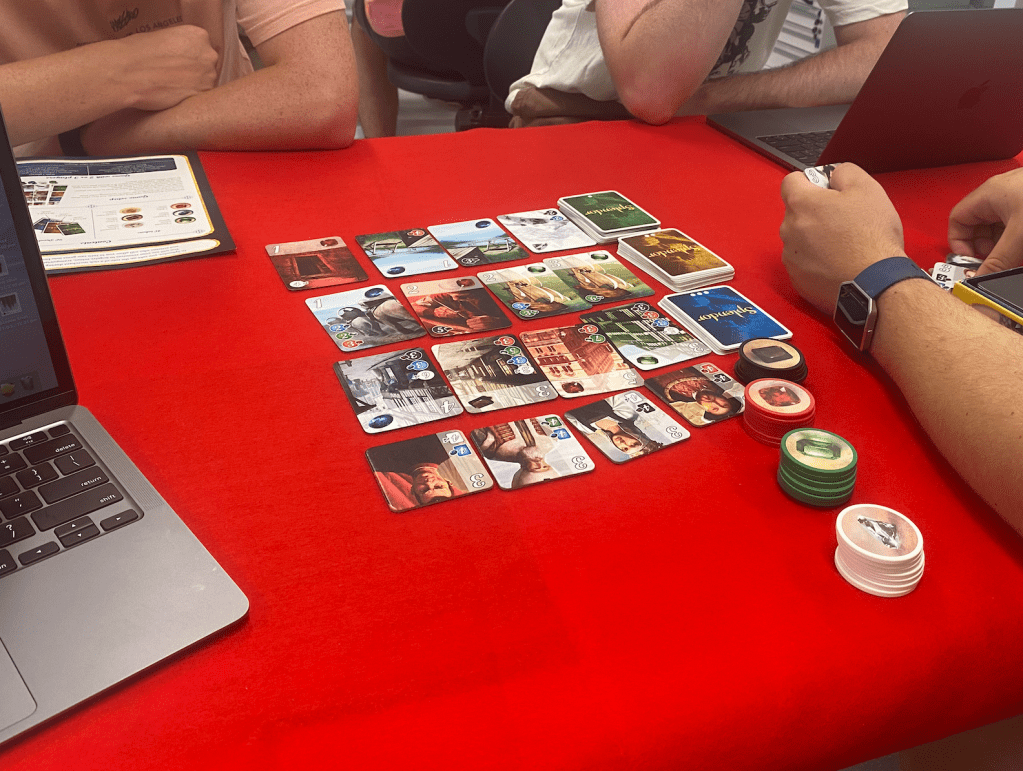
We realised that this game was one that was going to take a lot longer to play, and in saying this, about an hour into the game we discovered we had been playing the game wrong with one of the rules. Despite this, we decided to continue playing the way we already were as we felt it sped up the process so much more and created more of a flow to the game play. We concluded on that thought by feeling that if we had followed the game rules properly then it would have made the game so much slower. The game started off really slow then picked up as we got further along into the game as not only everyone understood the game but that is just how the actual game is.
The setting and story of this game wasn’t a major component of the game, although I did find it necessary for the game. Not so much the story but the setting. As the noble cards were a part of the game, this to me created a setting but not a story. This setting gave the game some sort of fictional feel to is it was said to me through understanding the mechanics of the game “the noble will come to you when you have the right number of gems”, this made the game feel more real than just another card game.
I ended up coming last in Splendour … how disappointing of me.
Until Next Time, R.

 immerse into media
Reblogged this on Game Cultures.
LikeLike