This semester, Hunter, Casey, Seth, Danielle, Tobias, Jett, and I have been working on our group tabletop game – ‘Have You Met Me?’ This game is a dating inspired card game with a deck of 130 cards and is a 4-10 player game. Surprisingly enough, the first game genre/theme we discussed about, we ended up staying with throughout the entirety of completing the game rules, mechanics, and design processes.
During the first week of designing the game, Jett was the one who sparked the idea in everyone’s minds. He spoke about the Netflix show ‘Are You the One?’, where each ‘player’ or ‘contestant’ on the show was there to find their perfect match and test if they could get it right. Reality TV at its finest if you ask me. From this, as a group we all started to come up with masses of ideas of what our game would include. We all, however, had the same end goal, we should make it a dating inspired game where players are to ‘find their perfect match’. From the get-go of iterating our project, we wanted players to join the magic circle with the intention of corresponding personality traits to find their perfect match.
First on our agenda, to just get this part out of the way, was coming up with the name of our game. We all just sort of stared blankly, so I turned to Hunter and went “Go, think of a name.” Then, he just goes, “Haaaaaave you met me?” Ever since, the name stuck, and it fit quite perfectly.
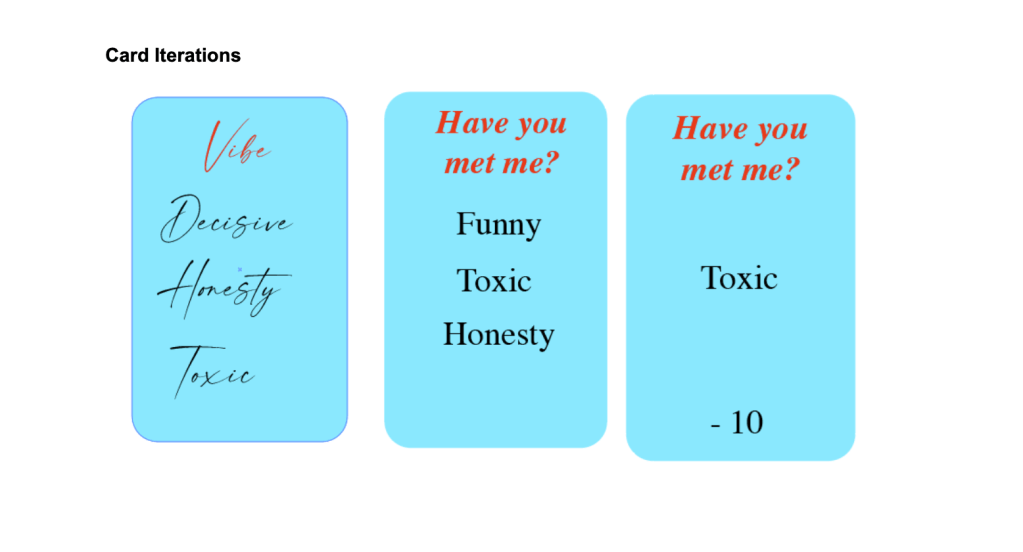
As a group we had quite a long iteration process of how we wanted the mechanics of the game to work, what cards were involved and how they were all going to be designed. We had a light bulb moment and firstly came up with the idea of vibe cards and red flag cards. The vibe cards were a way of gaining in this game and the red flag cards were a way to set back players and ensure the game is bit more fun to be played. As we were writing the different personality traits on the vibe and red flag cards, we saw that calling them vibe cards didn’t fit the game right, so that’s when we came up with the name trait cards, as that is exactly what they are. They are the cards in our deck that hold the traits that you need to gain to win. We all agreed to making sure the vibe cards and red flag cards looked the same on the back so that players didn’t know if they were getting a good, or bad card. This was to have an element of surprise and risk in the game and to keep it interesting. We also came up with the idea of character cards so that each individual player had a person that they were playing the game as. These character cards basically rule how each player plays the game. Through these cards we had come up with, we originally wanted our game to be played/set out like Splendour, which we had previously played in class. Therefore, we added the element of using Tokens in our game to gain vibe cards and red flag cards.
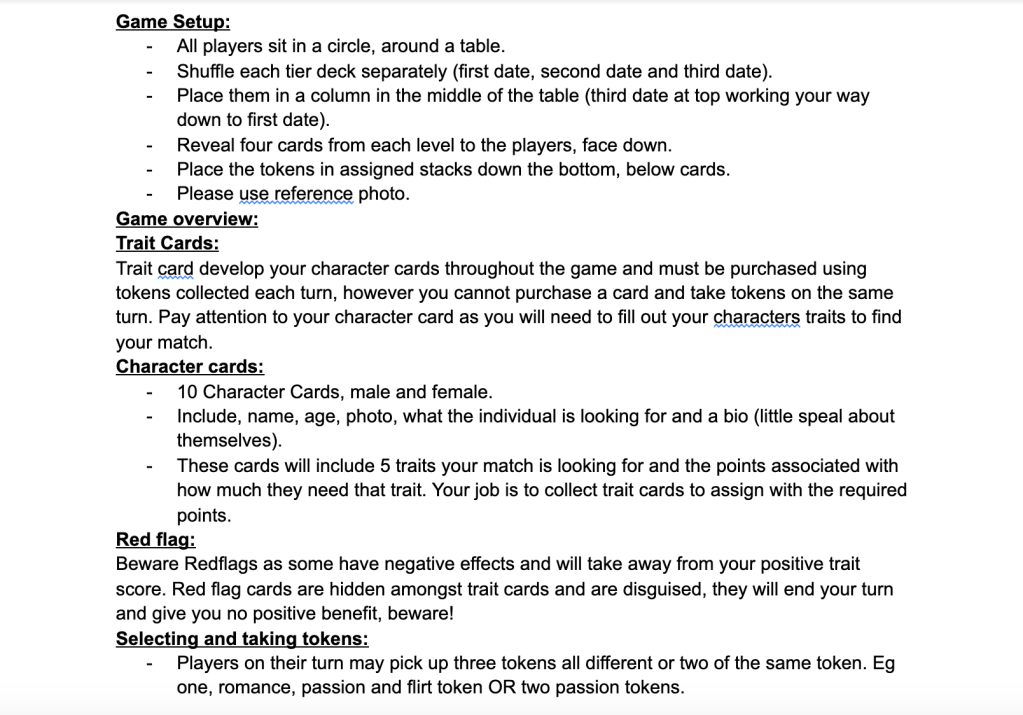
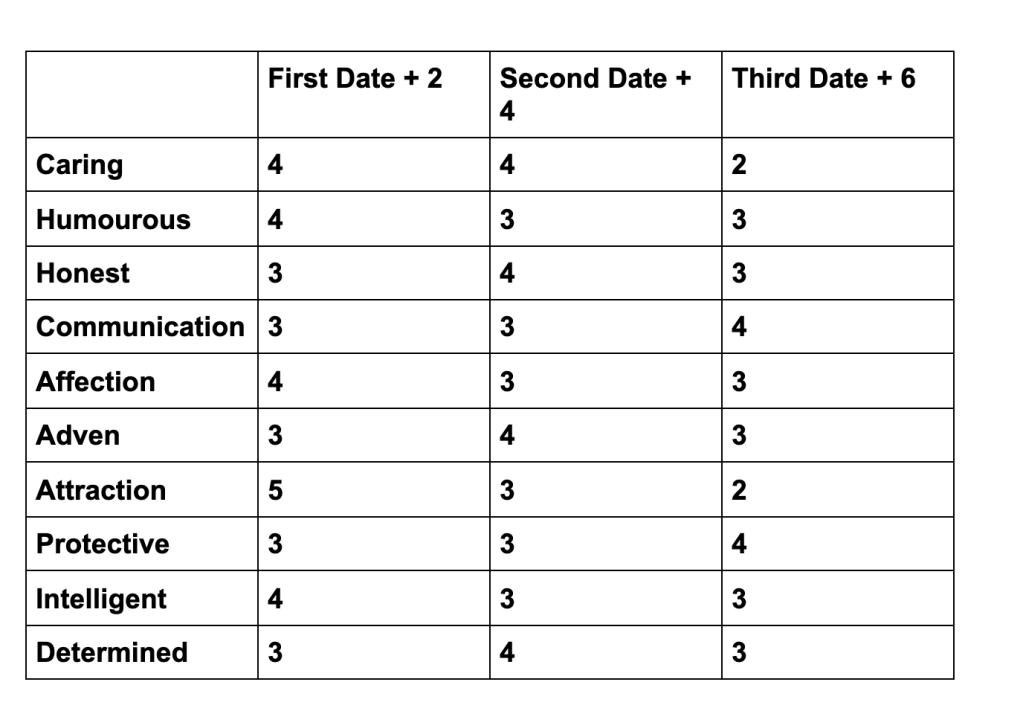
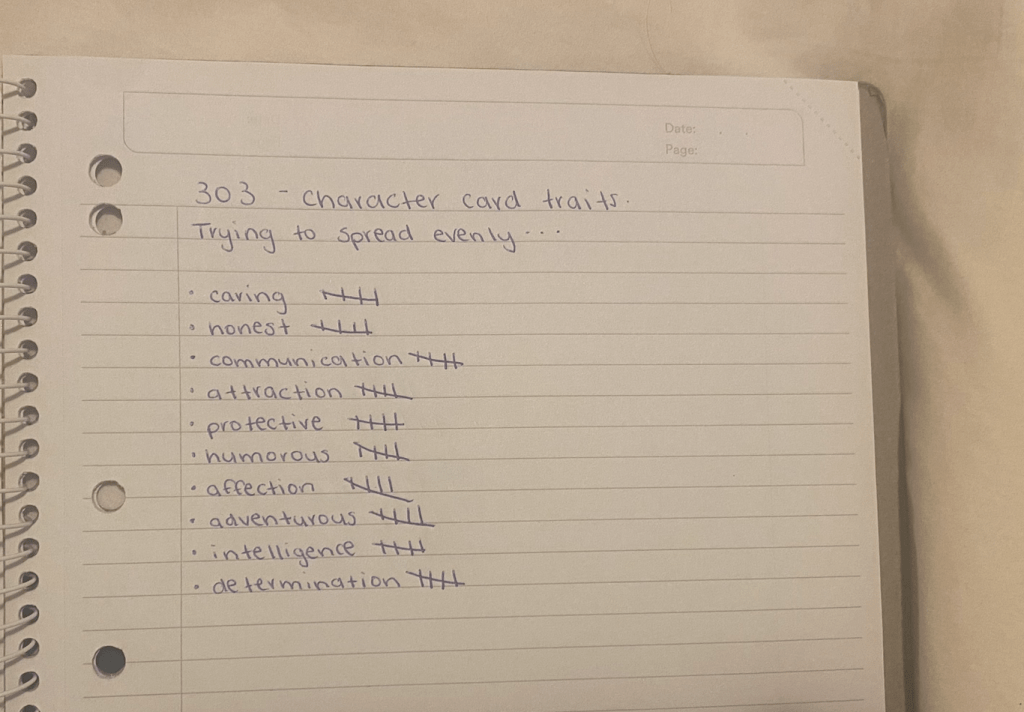
Our first meeting as a group ran quite smoothly and this is where we came up with everyone’s individual roles in the team. We decided the boys would figure out what traits the trait cards and red flag cards needed, and the girls were doing the design of the cards. I personally took charge of the character cards. I really wanted the design of the character cards to reflect a Tinder profile, as that is a very popular app amongst young adults our age. I felt as though the design of the card replicates this quite well. An issue however that I did come across while making the character cards was the skin colour of each player. I would have liked diversity among the characters but every ‘human looking’ avatar/character generator did not have the option to change skin colours. That is probably one of the only things I would change about our cards.
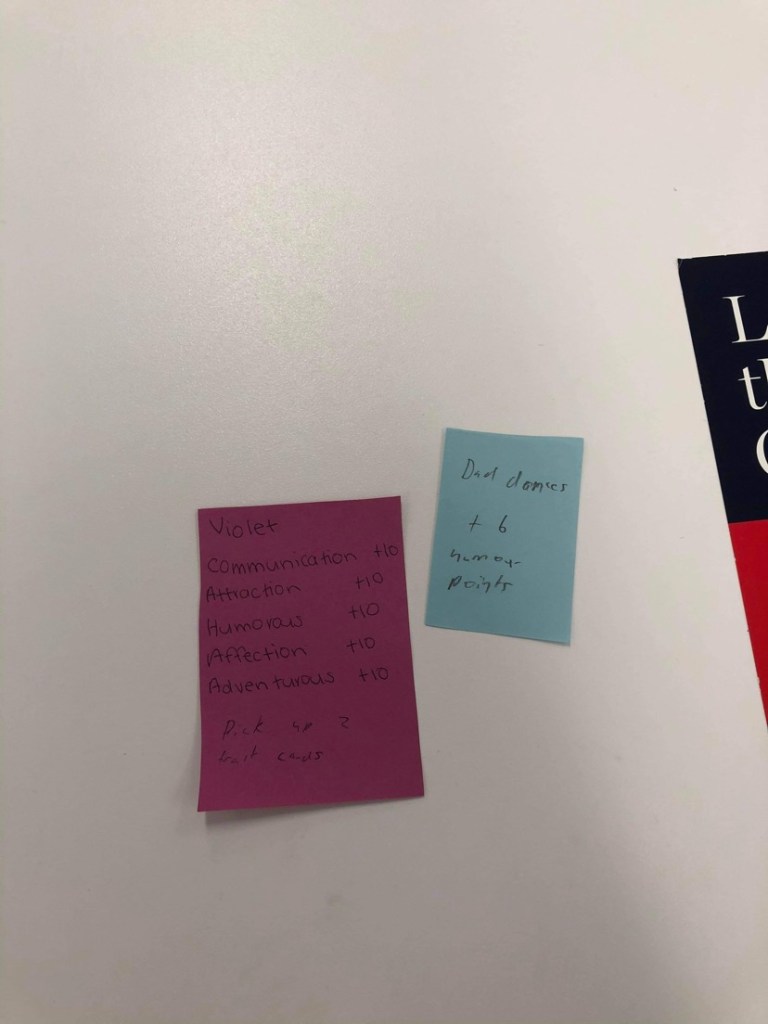
With the character cards (link should take you to the site I used and the mock ups of the character cards), the original ones were to have the traits players needed to collect and a witty bio at the bottom to keep the game light-hearted and to get to know each character a bit better. However, our very first, very rough, play test was done, we realised the game was kind of boring and repetitive, which is where we decided each character to have a specific ‘power’ that they can use once in the game. We ended up coming up with five different powers, so each boy contracted one and each girl received the same as a boy, to keep the game fair. Hunter and I sat together to come up with these powers and ensure each one was just as an advantage as the others. Therefore, we replaced the bio on the character cards with what each character could do during the game. With this rule however, once Hunter play tested the game once again with his roommates, he said that the powers should be able to be used more than once, which is why now players can use their powers 3 times during a game.
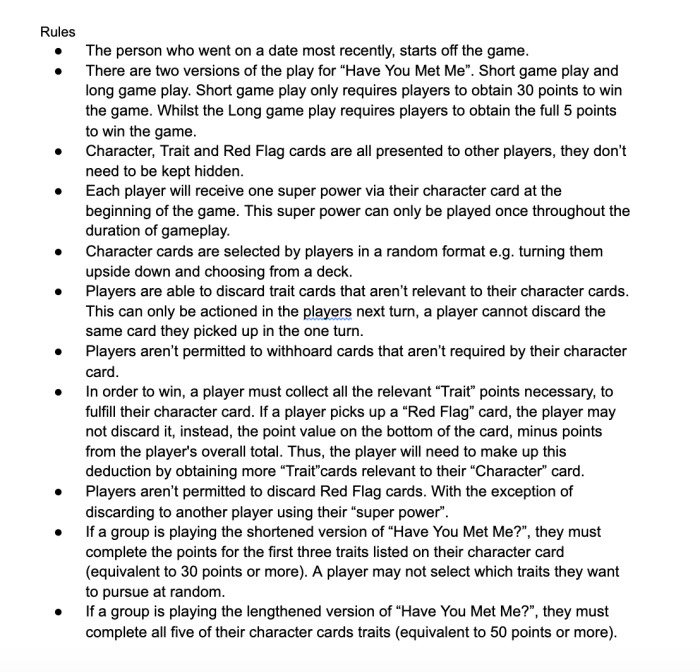
During other meetings our group had, the iteration process changed immensely. The first mechanic we changed were the tokens, we decided it was too much for the game, so we removed them. At one point we had dice in there to determine which tier the player would be choosing a card from. However, we landed on all the cards in one pile, and when it is your turn and you pick up a card, if you need that card, you can keep it, if you don’t then you can place it in the discard pile. Although, you can’t discard red flag cards or keep cards you don’t need to ‘cancel out’ red flag cards. Then we also came up with the two different versions of the game, the longer version and the shorter version. We decided that if players wanted a shorter game they could use only the first three traits listed on their character cards to have 30 points to win, or if they wanted a longer game they could use the entire card and gain 50 points to win.
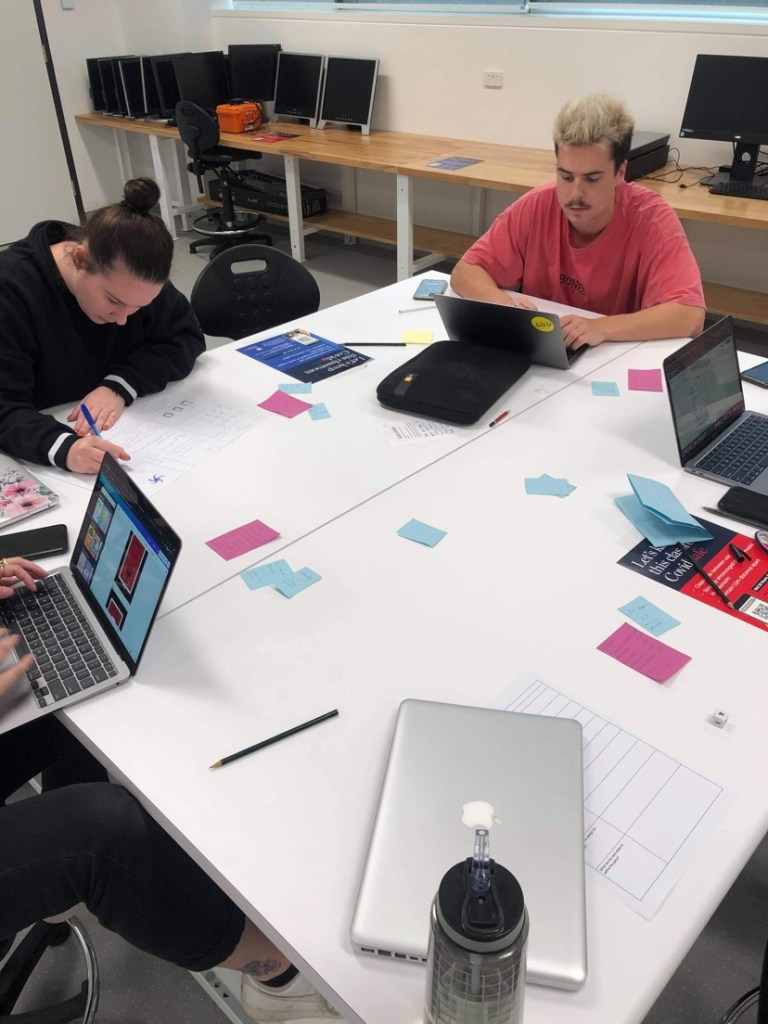

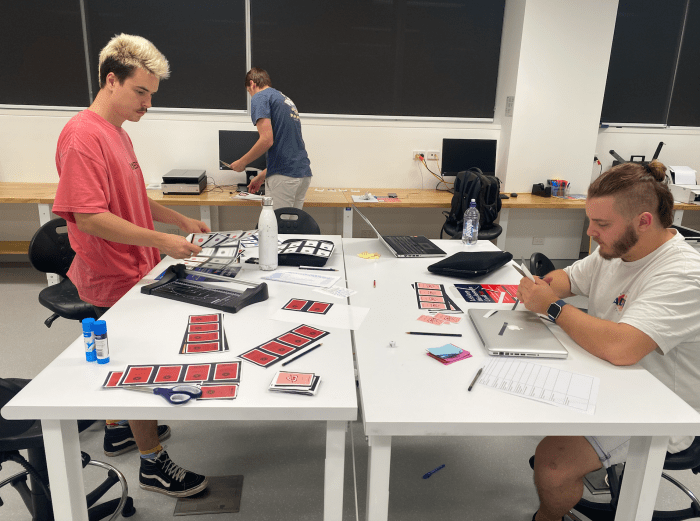
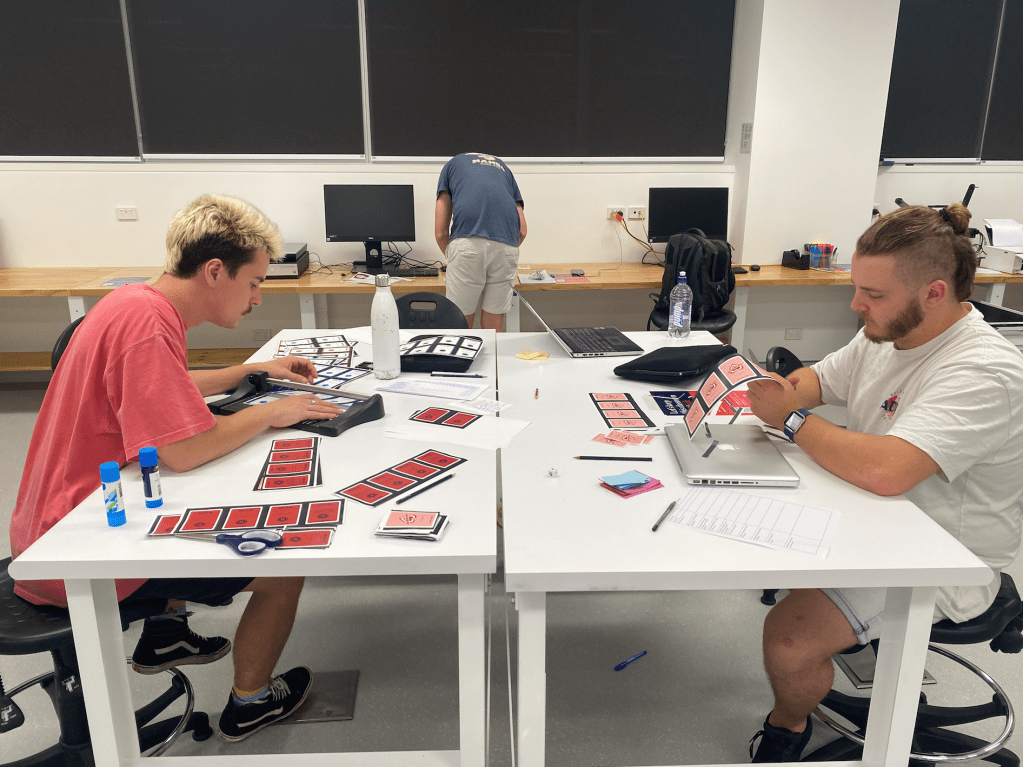
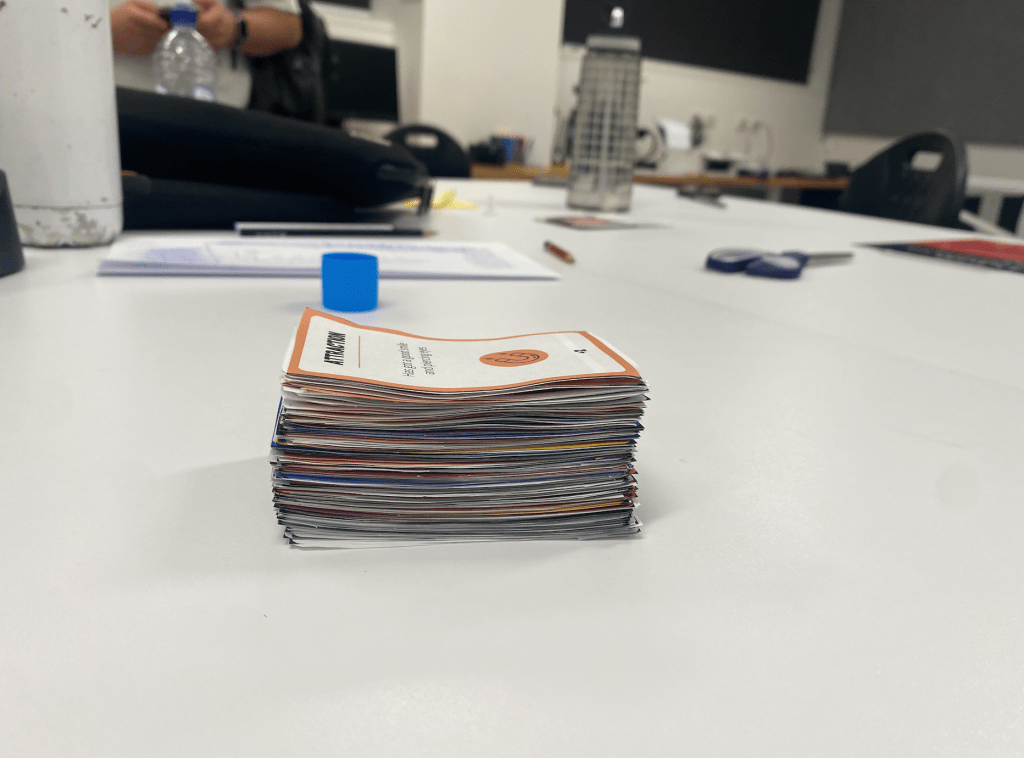
The most difficult part of this project for me was printing the cards. It took Seth and I over an hour to print them, with multiple issues along the way and once we had printed the cards, both the fronts and the backs, we had around 260 cards to cut and glue together. Seth, Hunter, Tobias, and I were the ones who did this physical aspect of the game design and it all came together quite smoothly.

Overall, I felt as though our team worked tremendously well together and evenly distributed the labour not only the best we could but, whilst utilising each individuals skills they could bring to the table.

 immerse into media
Reblogged this on Game Cultures.
LikeLike